When you tell people you’re building something online, they say “Wow, that’s amazing.” But then behind closed doors, you wonder: Will anyone actually pay me for this? The Psychological Game starts here.
I’ve been in that spot more times than I can count. You’re not alone if you’re wrestling with doubt, hesitation, or that quiet voice inside telling you to wait until “everything is perfect.” What most aspiring founders don’t realize is: those internal blockades, imposter syndrome, perfectionism, overwhelm, fear of rejection, are far more limiting than your business idea or technical skills. Understanding The Psychological Game is crucial.
In fact, I believe (and I’ve seen in my work with hundreds, even thousands, of founders) that making your first dollar online is the moment you shatter those psychological walls. After that, your trajectory changes. The Psychological Game is won.
This article is for the first-time founder who hasn’t made their first sale yet, or has made just one or two but still feels stuck. I’ll walk you through the common mental barriers, how they show up in real life, and a practical framework to push through them. Let’s make that first dollar yours.
By navigating The Psychological Game effectively, you’ll find the confidence to move forward.
Why This Matters (and Why It’s Rare)
Before we get into the traps and tactics, let’s sober up: most ventures never get traction. Some data:
- Across industries, up to 90% of startups eventually fail.
- In the U.S., more than 1 in 5 new businesses fail within the first year, and by year five, nearly half have folded.
- Specifically for online ventures, many sources claim as many as 90% fail within 120 days due to poor marketing, weak traction, or lack of clarity.
The point: failing to make your first customer is part of what causes many ventures to die quietly. It’s not about being unlucky, it’s about internal hesitation, missteps, and psychological anchors.
If you don’t push through those walls, your idea never gets tested, refined, or scaled. And you remain in the “idea loop” forever.
So let’s expose those walls first.
The 5 Invisible Walls That Keep You from Earning
Below are the mental barriers I see most often. I’ve faced them myself (even after building multi-million-dollar products), and I’ve guided founders past them countless times.
1. The Imposter Syndrome Trap
“Who am I to charge money? I’m not enough.”
This one is almost universal. A 2020 Kajabi survey found that most entrepreneurs and small business owners admit to feeling like impostors. In a UK survey, 78% had experienced impostor syndrome at some point.
What’s tricky is that imposter syndrome and perfectionism are deeply linked. When you believe you must always deliver flawless work, any mistake triggers self-doubt.
Reality check: You don’t need to be the world’s authority. You just need to be a few steps ahead of the people you want to help. Your lived experience, your learnings (including failures), your unique voice, that is your value.
2. The Perfectionism Paralysis
“Just one more tweak, one more test, one more polish.”
Perfectionism is the silent blocker. When you delay the launch again and again in pursuit of “perfect,” nothing ships. Studies show that high perfectionism correlates with burnout, procrastination, and reduced productivity.
Here’s what I know from experience: the first version will always embarrass you in hindsight. My early digital products had typos. My first podcast episodes stuttered. But they landed. If I’d waited for perfect, I’d still be waiting.
The market rewards action, not perfection.
3. The Overwhelm Spiral
“There’s so much I need to learn. What if I pick the wrong strategy?”
With thousands of tools, courses, platforms, and voices shouting at you, it’s easy to get stuck in analysis paralysis. You try to master everything before taking one step.
But you don’t need mastery, you need clarity. You need one path to your first dollar, then iteratively iterate from there. When I coach founders, I often tell them: pick one channel, one offer, one audience. Focus until you clear that first revenue.
4. The Fear of Rejection
“What if no one buys? What if I ask for money and get ignored?”
This is a deep, primal fear. As humans, we don’t like hearing “no.” But in business, no is feedback. Every rejection helps you refine your messaging, your offer, your positioning.
Remember: the founders who succeed aren’t the ones who never hear no, they are the ones who keep learning from every no.
5. The “Someday” Syndrome
“I’ll launch when things are better. When I have more edge. When I feel ready.”
“Someday” is a lie. It’s the comfort zone’s trick to keep you stalled. The truth is: the perfect time rarely exists. The most effective founders don’t wait—they start. With what they have. With the constraints. With imperfect conditions.
A Simple Framework to Break Through: F.I.R.S.T.
Here’s a plug-and-play framework you can use to go from idea to first dollar. I call it F.I.R.S.T.:
| Step | Focus | What You Do |
|---|---|---|
| Find your core value | Choose one small offer | Pick something doable you can deliver (e.g., a mini course, consult call, digital asset) |
| Interact & validate | Talk with 10–20 prospects | Ask them “If I built X, would you buy it now? Why or why not?” |
| Run a micro-launch | Ship fast, low risk | Use a small, controlled launch—email list, friends, social media |
| Scale only after proof | Invest resources later | Once you cross your first 10/20 sales, reinvest and expand |
| Tune & iterate | Improve based on feedback | Use customer feedback and rejection data to refine offers |
Here’s how the framework helps you deal with the 5 walls:
- Imposter: You shift from self-assurance to proof, your first sales become your confidence engine.
- Perfectionism: Because you build a small, minimal offer, you bypass the need for perfect.
- Overwhelm: One clear path at a time; you don’t need to master everything from day one.
- Fear of rejection: That micro-launch gives you permission to hear “no” safely, and learn.
- Someday: You commit to a timeline. The framework forces you to act now.
Real Examples & Cases
- Buffer’s “Wizard of Ads” mini-offer: You might know Buffer for their social scheduling tool, but in early days, they sold small consulting/ad wizard services as they built audience trust.
- Val Geisler’s onboarding audit: She started by offering “email onboarding audits” to SaaS founders, simple, narrow, and high-value. That first $1K she generated allowed her to expand into full retainers.
- Caterina Rando’s micro-course test: She launched a 2-hour class first, before scaling it to a full curriculum. That early revenue validated demand before she built more.
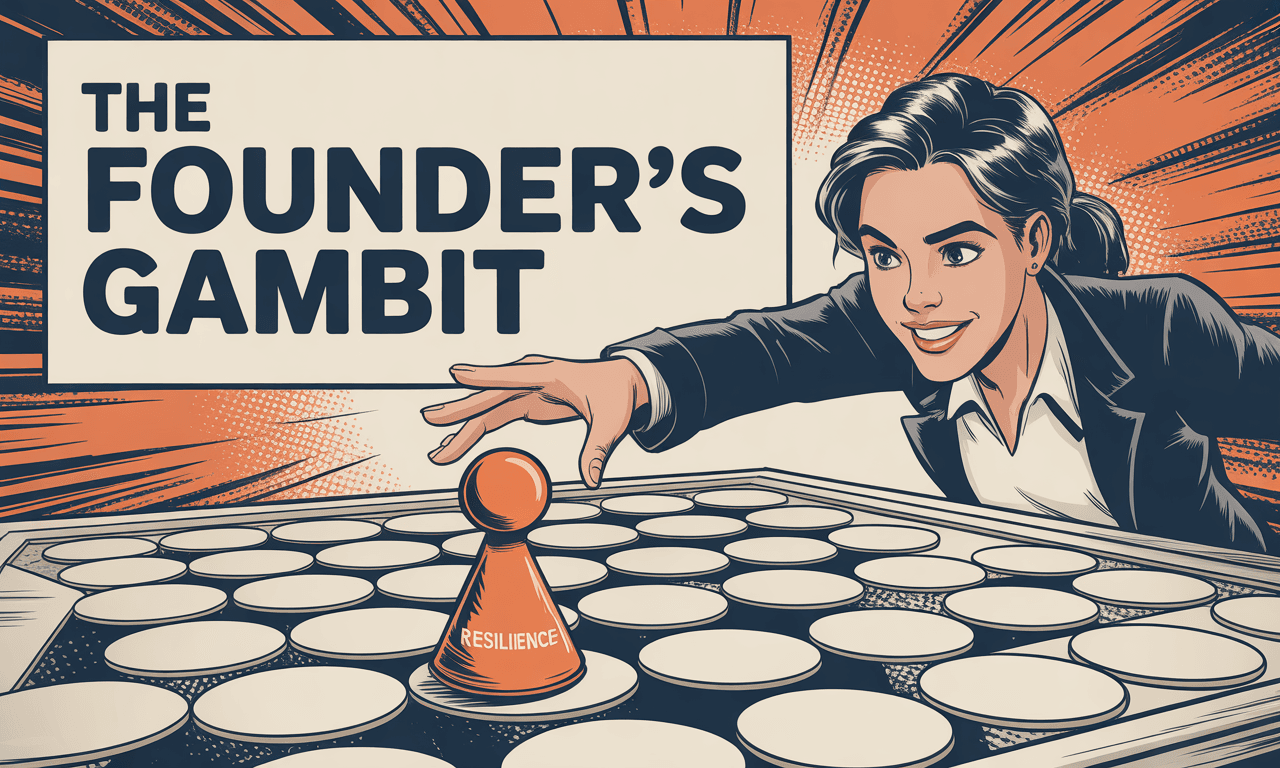
These are founders who gamified the first sale: they didn’t wait for perfect, they shipped something small and real.
Action Steps (Do This TODAY)
- Pick your offer: Doesn’t have to be perfect; must be real.
- Talk to 10 people: Use WhatsApp, DMs, calls. Ask, “Would you buy this? Why or why not?”
- Launch it: Even if it’s to 5 people. Ask for feedback and adjustments.
- Document & reflect: Which objections repeat? Where did people drop off? Adjust.
- Rinse and repeat: Use what you learn to make a better version. Repeat the cycle.
Commit publicly. Say you’re going to put a small offer out there this week. The accountability helps.
Closing Thoughts & Invitation
You’ve heard the stories: the founder who “overnight” hits six figures. But those stories skip the hundred micro failures, the first “no,” the late nights, the self-doubt.
That first dollar isn’t just revenue. It’s proof. It’s conviction. It’s permission to expand, to risk more, to build bigger.
I believe in you. And if you feel like you’re stuck behind one of those invisible walls, it’s not because you’re weak, it’s because you’re human. But you can break through.
If you want, I’d be happy to run a open session with Nomad Foundr on “First Dollar Workshop” where I walk founders live through F.I.R.S.T. and help them get that first paying customer. Would you like me to set that up and invite people?
Let me know. Meanwhile, go ship something small this week.
Whenever you’re ready, here are 3 ways I & Nomad Foundr can help you:
1. Join The Newbie Founder Newsletter: A weekly 5-minute read to help you break through mental blocks, blind spots, and skill gaps. Plus every month you’ll also get a new hands-on email mini-course to grow your business and audience, delivered straight to your inbox.
2. The Nomad Foundr Resources Vault: Access thousands of curated tools, templates, blueprints, mini-courses, and services designed to save you months of trial and error. Get the All-Access Pass to unlock the entire vault to accelerate your journey.
3. Join the First-Time Founders Program: Our 90-day flagship course with 3,000+ founders. Get the frameworks, skills, and hands-on guidance to turn your knowledge into a real business. Step by step, you’ll ideate, validate, build, launch, and land your first 1,000 customers. By the end, you’ll have launched your business and started growing your audience.