“Your greatest obsession might just be your greatest business opportunity, but only if you can preserve what made you fall in love with it in the first place.”
The Trap and the Possibility
If you’re like me, you’ve carried a hobby close to your heart for years. For me, it was reading, devouring non-fiction, mentoring, finance, storytelling. It was my refuge, my lens to understand the world. Yet somewhere along the journey, I asked: can this joy also become my mission and business?
But here’s the honest truth: passion alone doesn’t make a business. Many hobby-turned-business efforts sputter. Burnout erodes your love. Market realities bite when you try to scale without rigor.
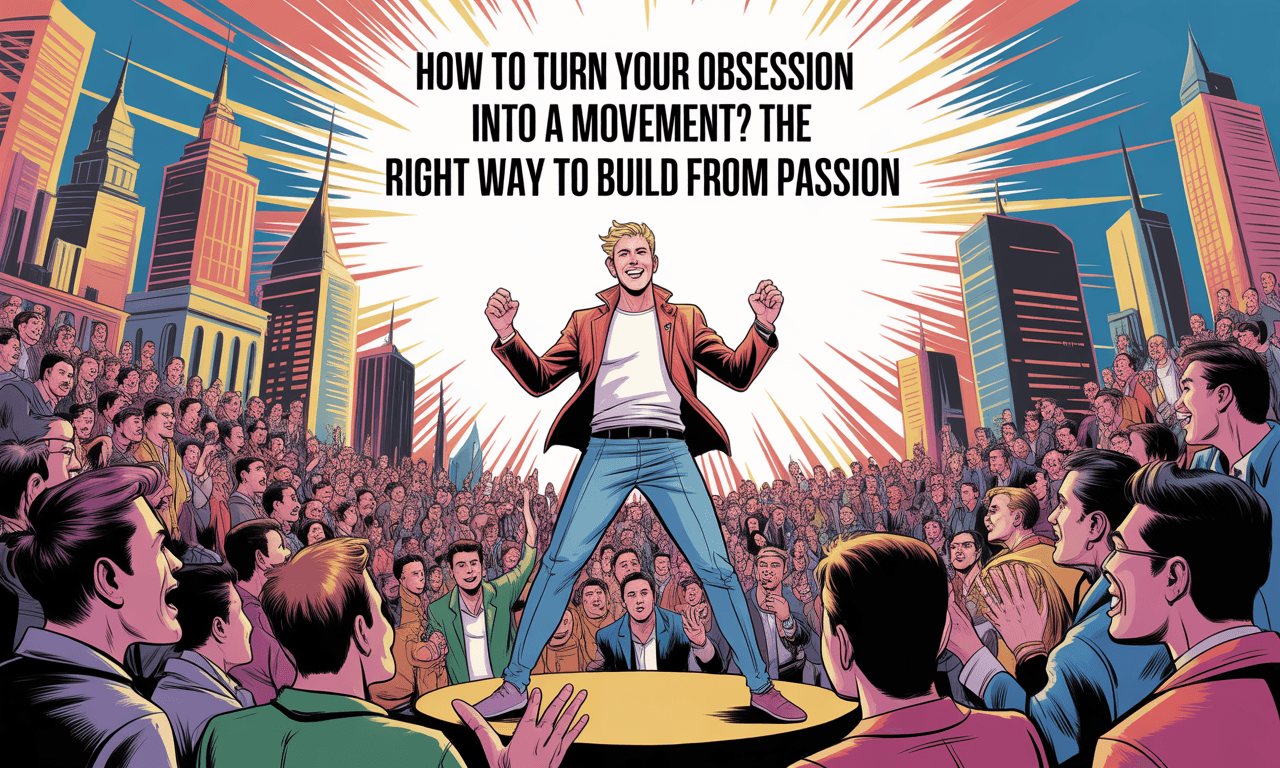
In this article, I want to show you how I turned my reading obsession into a business that now supports first-time founders, small businesses and creators globally, and how you can use a clear framework to Turn Your Obsession into a Movement without losing your soul along the way. By following this guide, you can transform your passion into a thriving movement.
If you’re a founder or aspiring founder who’s asked, “Can I make my hobby my startup?”, I wrote this for you.
The Unspoken Reality: Why Turning Passion into Business Is Risky
Before we build, let’s look at the data so we don’t fool ourselves.
- The most cited reason startups fail is that they built something no one really needed. About 42% of startups cite “no market need” as the core reason they failed.
- Founder burnout is another silent enemy. In 2024, 53% of founders reported experiencing burnout.
- Stress doesn’t just hurt you, it kills the startup, too. 88% of founders agree excessive stress leads to poor decisions.
- Nearly half of founders feel low community support, especially early-stage founders.
So when you mix the emotional stakes of your hobby with the pressures of a business, you’re zooming into a minefield. To navigate it, you need a framework that preserves the joy while demanding discipline.
How I Did It: The Framework (or, What I Wish I’d Had Earlier)
Below is the map I constructed along the way. Use it as a checklist, not as dogma.
1. Define Your “Why” Very Precisely
- Differentiate joy from mission. It’s easy to say, “I love drawing, so I’ll sell my art.” But that’s not a compelling why. The question is: why do I want to do this beyond selling?
- For me: books were never just entertainment. They were windows into transformation. Reading taught me that your origin story doesn’t define your future. My mission became enabling writers everywhere to express and scale, storytelling as democratized power.
- Your “why” must be other-oriented, not “I want to make money doing what I love,” but “I want to help X people achieve Y transformation using what I love.”
This clarity will be your north star in decision-making, moment-to-moment, when trade-offs hit.
2. Connect Passion to Real-World Problems
Passion without solving real problems is ego-driven. This is where most founders fail.
- Ask: What struggle, pain, or gap exist in your domain?
- Test: Does your idea address that?
- Iterate: Even passion ideas must evolve to meet users.
Some examples:
- Etsy didn’t just let people sell crafts; it solved the problem that individual artisans had zero reach or infrastructure.
- AeroPress didn’t exist because someone loved brewing weird coffee, it exists because very few portable coffee makers deliver high flavor with minimal mess.
- In our case: when I looked at writers, I saw persistent hurdles, writer’s block, structural gaps, visual storytelling, pacing, editing support. Most writers work alone; professional support is expensive and centralized. That becomes your opening.
3. Start Small: A Community Before a Product
You don’t launch a massive platform first. You build a community, test one or two features, then expand. Here’s why:
- It’s a low-cost, fast way to validate your idea.
- You get early feedback and direction from people who care.
- You build ambassadors and believers, not just users.
Many big names began this way:
- Reddit began as small interest groups before exploding.
- Duolingo started as a modest beta community of language learners.
On My Passion, our early readers and writers were the product testers, our “alpha club.” They told us what they really needed, not what we guessed. That shaped our roadmap.
4. Preserve the Joy: Disrupt the Dark Side of Monetization
This is where most people get derailed.
- Once your hobby becomes your income source, the internal narrative shifts: “I must perform,” “I must sell,” “I can’t fail.”
- Deadlines creep in. Creativity can feel transactional.
- Burnout starts whispering.
I guard myself this way:
- Other passions still matter. I meditate daily, read for fun (not work), and let ideas gestate outside core “product time.”
- Design boundaries. No “always-on” grind. Create cycles of rest and regeneration.
- Metrics over vanity. Focus on leading indicators (community engagement, retention) rather than chasing revenue too early.
When a writer messages me that our platform helped them break through a block they’d wrestled with for years, I know we’ve transcended monetization. We’re delivering real transformation.
5. Scale with Discipline: Multiply, Not Multiply Chaos
Once you see traction, growth is tempting. But scaling passion-driven businesses is a delicate task. Here’s how to keep it sustainable:
- Standardize core processes (onboarding, feedback loops, product releases) so they don’t all run through you.
- Hire aligned culture fits, not just talent. The more your team “gets” your passion DNA, the less friction when decisions are subtle (e.g. feature trade-offs).
- Guard against what killed many companies: assuming your next product will be as easy (the “second product syndrome”) or that your first success formula will always repeat. Wikipedia+1
- Revisit your “why” quarterly, burnout will try to shift it if you let it.
Actionable Steps: Your Launch Checklist
Here are steps you can implement today (or this week) if you’re thinking of turning your passion into a startup.
- Write your “why” statement (100 words max). Test it by asking a few people: does this feel compelling?
- List at least three pain points people in your domain face. Interview 10 potential users and validate whether those are real.
- Identify your earliest minimum offering. What’s the smallest thing you can build (even an email group, a Slack, or a mini-course)?
- Recruit a small “first community” of 20–50 people. Engage with them personally. Ask for feedback.
- Set non-negotiables to preserve your joy. For example: fixed no-work days, time for your other hobbies, “off metrics” reading.
- As traction grows, systematize what works, document, hire, offload responsibilities.
Why This Approach Builds a Strong Founder Brand Too
- It positions you as a bridge, not just a seller, you’re someone who took passion seriously and made it meaningful for others.
- You attract people who “get” your DNA. Your community, your audience, are drawn to your authenticity and mission.
- You collect stories, not bragging case studies, but transformation stories, that will anchor your thought leadership. When writers say, “This tool saved me months of struggle,” those stories strengthen your authority more than any pitch deck.
Conclusion: Your Hobby Doesn’t Need to Eat You Alive
I transformed reading into a startup because I kept a fierce guard: passion must translate into value, but value must not kill passion.
You can, too, but only if you build your way out of ego, stay humble to feedback, protect your rhythms, and scale thoughtfully. Don’t let the pressure of monetization hollow out what you love.
If you’re ready to see your obsession as an opportunity, start by defining your “why” this week. Let’s begin there.
If you want help doing this, from crafting your “why” to mapping your first community, reply to this message or send me a DM. Let’s turn your passion into a momentum you love.
Whenever you’re ready, here are 3 ways I & Nomad Foundr can help you:
1. Join The Newbie Founder Newsletter: A weekly 5-minute read to help you break through mental blocks, blind spots, and skill gaps. Plus every month you’ll also get a new hands-on email mini-course to grow your business and audience, delivered straight to your inbox.
2. The Nomad Foundr Resources Vault: Access thousands of curated tools, templates, blueprints, mini-courses, and services designed to save you months of trial and error. Get the All-Access Pass to unlock the entire vault to accelerate your journey.
3. Join the First-Time Founders Program: Our 90-day flagship course with 3,000+ founders. Get the frameworks, skills, and hands-on guidance to turn your knowledge into a real business. Step by step, you’ll ideate, validate, build, launch, and land your first 1,000 customers. By the end, you’ll have launched your business and started growing your audience.